History of Singapore Zoo | 50+ Years of Wildlife Innovation
Trace the Singapore Zoo’s journey from 1973 to today. Discover the "Open Zoo" revolution, the legacy of Ah Meng, and 50 years of world-class conservation.
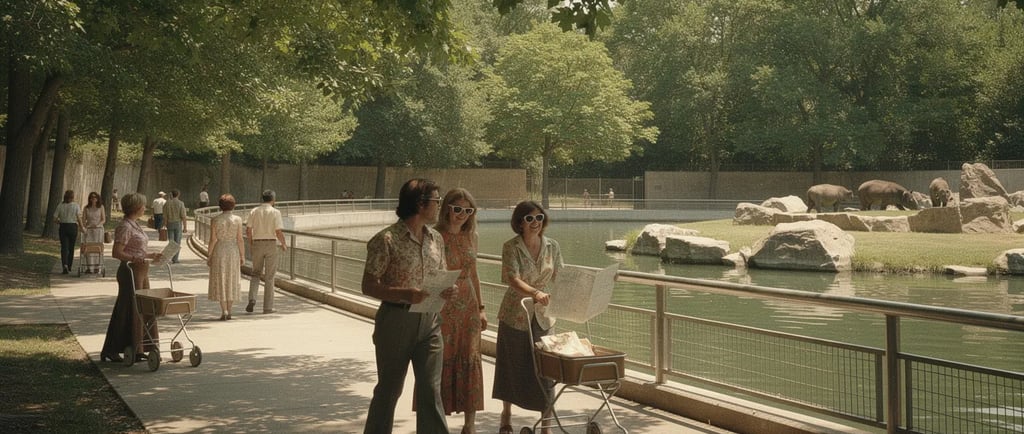
From Concept to Global Icon: The Storied History of Singapore Zoo
Nestled within 28 hectares of lush rainforest near the Upper Seletar Reservoir, the Singapore Zoo stands as one of the world’s premier rainforest zoos. Since its doors first opened in 1973, this wildlife park has welcomed millions of visitors to experience its revolutionary open-concept design—a pioneering approach that replaced iron bars with natural moats and vegetation.
The Singapore Zoo history spans more than five decades of transformation, from a modest collection of 270 animals to a globally respected institution housing over 4,200 animals from more than 315 species. This is the story of how a small nation built a world class zoo that changed how people experience wildlife.
Quick Overview of Singapore Zoo’s History
The Singapore Zoo opened on 27 June 1973 near the Upper Seletar Reservoir in the Mandai district. Originally known as the Singapore Zoological Gardens, the facility was built at a cost of approximately S$9 million, funded entirely by the Singapore government. What set this zoo apart from others in the region was its commitment to open-concept enclosures—a design philosophy that would influence zoo architecture worldwide.
When the zoo opened, it housed roughly 272 to 300 animals representing about 70 species across 50 basic enclosures. The staff numbered just 130 people. By contrast, Singapore Zoo today cares for over 4,200 animals from more than 315 species, with over 30% classified as threatened species. This dramatic growth reflects both the institution’s success as a tourist destination and its evolution into a conservation-focused research centre.
The Singapore Zoological Gardens story includes several remarkable firsts that cemented its international reputation:
Pioneering open-concept moated enclosures in Southeast Asia during the 1970s
Successfully breeding orangutans in captivity from 1975 onwards
The birth of Inuka, the first polar bear born in the tropics, on 26 December 1990
Becoming a model for naturalistic zoo design that other institutions studied and replicated
The zoo’s 50th anniversary, celebrated as the “Golden ZOObilee” on 27 June 2023, marked a significant institutional milestone. The celebration reflected how this once-modest facility had transformed into a cornerstone of Singapore’s cultural landscape and a major contributor to regional wildlife conservation efforts.
Early Zoos in Singapore Before Mandai (1870s–1960s)
Before the modern Singapore Zoo existed, Singapore had several earlier attempts at creating zoological attractions. These predecessor institutions, though ultimately unsuccessful, shaped thinking about what a permanent zoo should look like and directly influenced the decision to build a purpose-designed facility at Mandai.
The first recorded zoo founded in Singapore operated within the Singapore Botanic Gardens from approximately 1875 to 1905. This early facility maintained mixed collections of birds and mammals but struggled with challenges common to zoos of that era. Poor funding mechanisms, high animal mortality rates due to inadequate veterinary knowledge, and limited understanding of tropical species husbandry eventually led to its closure.
Following this, several private zoos attempted to fill the gap:
Punggol Zoo opened in the 1920s under William Lawrence Soma Basapa’s ownership but closed around the start of World War II when geopolitical disruptions made operations unviable
The Singapore Miniature Zoo operated during the 1950s and 1960s but similarly failed to establish itself as a permanent institution
Various smaller menageries kept domesticated animals and exotic species for public display with varying degrees of success
These early zoos were limited by several critical factors:
Insufficient capital investment and sustainable funding models
Limited space for proper animal husbandry and natural behaviour expression
Reliance on outdated “cage-style” exhibits that neither housed animals properly nor engaged visitors meaningfully
Lack of specialised veterinary care for tropical and exotic species
The failures of these private zoos taught Singapore’s post-independence leadership important lessons. When planning resumed in the late 1960s, decision-makers chose to build a purpose-designed zoological park at Mandai rather than attempting another facility within the Singapore Botanic Gardens or in a central urban location. The Mandai site offered substantial forested acreage, adjacency to water resources, and land that could be repurposed from existing Public Utilities Board holdings—advantages that previous zoo locations lacked.
Founding Vision and Planning (1968–1973)
The genesis of the present Singapore Zoo emerged from deliberate nation-building strategy in the immediate post-independence period. Just three years after Singapore’s independence in 1965, leadership recognized that a modern zoo could serve multiple national objectives: providing recreational space for an urbanizing population, offering educational opportunities about wildlife, and creating a tourist attraction that could contribute to economic development.
In 1968, Dr Ong Swee Law, then Chairman of Singapore’s Public Utilities Board, formally proposed creating a zoo on approximately 88 hectares of forested land around the Upper Seletar Reservoir. The site belonged to the PUB and offered natural landscape features—existing forest, water bodies, and topographical variation—that could be incorporated into an innovative zoo design.
Dr Ong Swee Law established a steering committee of 12 PUB officials to develop the proposal. Notably, most committee members lacked prior experience in zoo planning or management. Rather than attempting to develop expertise internally, they deliberately sought international consultation from zoo directors and experts across Europe, North America, and Australia.
The committee submitted its formal report in September 1969, recommending establishment of a zoological garden for Singapore. Following government approval in October 1969, the Singapore Zoological Gardens was formally incorporated as a S$5 million public company with a mandate to design, construct, and manage the zoo.
International expertise proved crucial to the design phase. Key advisors included:
Lyn de Alwis from the Dehiwala Zoo (National Zoological Gardens of Sri Lanka), hired as a special consultant to address problems inherent in tropical zoos
A.G. Alphonso from the Singapore Botanic Gardens, who contributed landscaping concepts using natural vegetation
The design concept emphasized naturalistic landscapes and open-concept enclosures. Rather than the iron-bar cage model still prevalent in most 1960s zoos, Singapore’s planners envisioned open moats and landscaped boundaries designed to appear natural rather than architectural. This approach would make animals displayed seem to share space with visitors rather than being imprisoned behind barriers.
The Singapore government allocated approximately S$9 million for construction and initial operations—a substantial investment for a newly independent nation that had simultaneous priorities in port facilities, industrial zones, and housing developments. Planning also incorporated sustainability considerations, with entrance fees designed to generate operational revenue and reduce long-term dependence on government subsidies.
Construction ran from 1970 to 1973, involving:
Conversion of secondary forest into landscaped exhibit areas
Creation of lakes and moats using existing topography
Building service infrastructure including kitchens, back-of-house facilities, and visitor paths
Planting approximately 2,000 specially selected trees to replace less desired vegetation and attract birds
Despite careful planning, challenges emerged. Three months before the scheduled opening, dramatic animal escapes made headlines, highlighting the learning curve in managing tropical species within novel enclosure designs. These incidents were managed without harm to animals or public but underscored the pioneering nature of the project.
Opening Years and Growth of the Collection (1973–1980s)
The Singapore Zoo opened officially on 27 June 1973, with the ceremony officiated by Deputy Prime Minister Dr Goh Keng Swee. The event became iconic when Goh famously shook hands with Susie, a Sumatran orangutan, creating an image that captured the zoo’s innovative approach to human-animal interaction. Public admission began the following day with entrance fees set at S$2 for adults and S$1 for children.
The initial collection consisted of approximately 272 animals from about 70 species, housed across roughly 50 enclosures by a staff of 130. While modest by absolute numbers, the distinctiveness lay in presentation philosophy. The open-moated enclosure design made the Singapore Zoo distinctive in Southeast Asia during an era when most regional zoos still relied on traditional barred cages.
Early exhibits were arranged around the reservoir and forest backdrops to create a spatial narrative moving visitors through themed landscape zones rather than orderly rows of cages. Key exhibit areas included:
Primate islands featuring orangutans and other apes
Big cat enclosures for Malayan tigers and African lions
Hoofstock paddocks for deer, antelope, and other grazers
Reptile garden housing snakes, lizards, and crocodilians
The zoo attracted visitors far beyond initial expectations. Within its first month of public operation, the Singapore Zoo welcomed over 850,000 visitors—remarkable given Singapore’s total population of approximately 2.2 million at the time. This meant nearly 40% of the nation’s population visited within four weeks of opening.
By November 1974, just 16 months after opening, the zoo reached its one-millionth visitor milestone. The zoo quickly became a school excursion destination and family outing venue, establishing patterns of visitation that continue today.
Breeding successes in early years demonstrated the new husbandry methods’ effectiveness. The birth of the zoo’s first orangutan infant in 1975 marked a significant achievement, as successful breeding of apes in captivity required sophisticated understanding of diet, social structure, reproductive biology, and stress management.
During the late 1970s and 1980s, the zoo gradually enhanced facilities:
More shaded pathways protected visitors from tropical sun exposure
Food outlets supported longer visits
Tram services accommodated elderly and less mobile visitors
Educational signage expanded to communicate conservation messages
The physical expansion introduced additional species and deepened representation of rainforest ecosystems, positioning the Singapore Zoo introduced as an institution capable of sustaining diverse tropical species in captivity.
Landmark Animals, Exhibits and Attractions
Several individual animals and key exhibits became symbolic of the Singapore Zoo and contributed powerfully to its history and public image. These favourite animals and signature experiences shaped how generations of visitors understood and connected with wildlife.
Ah Meng: The Iconic Orangutan
Ah Meng, a Sumatran orangutan who arrived in the 1970s, became the most celebrated resident in the zoo’s history. By the 1980s, she had become the zoo’s tourism ambassador, featured in marketing materials and serving as the public face of the institution. Her significance transcended her individual presence—she represented successful tropical ape management and symbolized the zoo’s commitment to animal welfare.
Ah Meng received the Special Tourism Ambassador Award in 1992, a unique recognition that made her a non human recipient of a national honour typically reserved for people. When she passed away in 2008, her death was marked as a significant national loss with extensive media coverage. Her legacy continues through:
A bronze statue at the zoo
The Ah Meng Bistro named in her honour
Continued breeding programs for Sumatran orangutans
The zoo featured Ah Meng in the famous “Breakfast with an Orangutan” experience (later renamed “Breakfast in the Wild”), allowing visitors direct interaction with orangutans in managed settings. This premium experience became iconic and contributed significantly to Ah Meng’s public status.
Inuka: The Tropical Polar Bear
Inuka represented a different kind of historical milestone. Born on 26 December 1990 in the Frozen Tundra exhibit, he became the first polar bear born in the tropics. This birth demonstrated that tropical zoo conditions could support breeding of temperate-climate megafauna, challenging assumptions about the constraints of equatorial geography.
Inuka became an ambassador for Arctic conservation education, helping the zoo develop programming around climate change and polar ecosystem vulnerability. His life spanned 27 years. His euthanasia in 2018 due to age-related ailments was documented as a significant moment in the zoo’s history, with public tributes acknowledging his educational contribution.
Following Inuka’s death, the zoo announced it would not acquire more polar bears on humane and welfare grounds, recognizing that despite their success, equatorial conditions posed inherent challenges for Arctic species.
Other Notable Residents and Rare Animals
The zoo houses and has housed many other significant animals over the decades:
Omar, a white tiger who arrived in the late 1980s as part of collection expansion into rarer species
Prominent Asian elephants that became iconic symbols of tropical megafauna
Golden snub-nosed monkeys and other endangered Asian species reflecting conservation priorities
White tigers introduced in the late 1980s, representing rare morphs with significant public appeal
Themed Zones and Exhibits
The development of themed zones transformed visitor experience and educational mission. Major exhibits include:
Fragile Forest - Immersive biodome environment - Rainforest ecosystems and biodiversity
Wild Africa - African savanna species - Continental ecosystem comparison
Primate Kingdom - Apes, monkeys, and prosimians - Primate evolution and conservation
KidzWorld - Interactive children’s area - Early wildlife education and engagement
Reptile Garden - Snakes, lizards, crocodilians - Reptile biology and role in ecosystems
These zones organize the collection into thematic groupings supporting educational narratives about different ecosystems and animal groups. Each zone communicates conservation messages and ecological concepts beyond simple animal display.
Amphitheatre animal presentations provide educational programming that contextualizes viewing within conservation narratives, moving beyond display toward active teaching about animal behaviour, ecology, and conservation challenges.
Conservation, Research and Education Milestones
The Singapore Zoo evolved from primarily an attraction into a regional hub for wildlife conservation, veterinary medicine, and environmental education. This transformation reflected broader changes in how modern zoos understand their mission.
Wildlife Healthcare and Research Centre
The establishment of the Wildlife Healthcare and Research Centre in March 2006, costing S$3.6 million, marked a formal institutional commitment to medical and scientific advancement. This 3.6 million Wildlife Healthcare facility featured:
Modern veterinary operating theatres for treating injury and disease
Diagnostic laboratories for disease identification and research
Quarantine facilities for new arrivals and ill animals
Public viewing areas allowing visitors to observe surgical procedures via live feed
The Healthcare and Research Centre demonstrates animal surgery and care practices, combining education with operational necessity. This transparency about animal care team operations has become a model for other institutions.
Conservation Breeding Successes
The zoo’s conservation breeding programs have achieved significant results across multiple threatened species:
Sumatran orangutans: Flagship conservation effort contributing to genetic diversity and population viability of this critically endangered species
Cotton-top tamarins: Small Colombian primates bred as part of international conservation efforts
River terrapins: Representing freshwater conservation priorities
Komodo dragons: In November 2009, the zoo welcomed its first Komodo dragon hatchling in 34 years—a hatchling named Mario who became the first Komodo dragon hatchling born outside Indonesia, positioning Singapore Zoo as a leader in reptile conservation
The first Komodo dragon hatchling followed one-and-a-half years of courtship between male Bima and female Yoko, demonstrating sophisticated understanding of reproductive biology and behavioural management.
In 2012, the zoo bred over 140 animals, many from threatened species, and participated in dozens of regional and global breeding programmes. This statistic confirms the zoo’s role as an active contributor to species preservation rather than a passive holder of animal species.
Educational Initiatives
The zoo developed comprehensive educational programmes to build conservation consciousness:
Friends of the Zoo: Supporter base and volunteer network
Animal Adoption Scheme: Public participation in conservation through financial contributions
Volunteer docent programmes: Training members of the public as interpreters
School excursions: Curriculum-linked programming positioning the zoo as an educational resource
Youth conservation ambassador schemes: Developing young leaders invested in wildlife protection
International recognition validated the zoo’s conservation standing. Steve Irwin, the famous Australian wildlife educator, endorsed Singapore Zoo as a sister institution to Australia Zoo. The zoo also received multiple Asian Attractions Awards and tourism awards recognizing excellence in operations and visitor experience. The Singapore Tourist Promotion Board frequently highlighted the zoo in tourism campaigns.
Integration into Mandai Wildlife Reserve and Golden Jubilee (1990s–2020s)
The Singapore Zoo’s institutional context transformed significantly with the creation of a broader wildlife park cluster in the Mandai area. What began as a single zoo has evolved into a comprehensive wildlife destination under unified management.
Expansion of the Mandai Wildlife Cluster
Night Safari, opening in 1994, became the first nocturnal zoo in the world. This innovative concept showcased animals during their active hours and extended the Mandai location’s appeal beyond daytime visits. Night Safari became a highly successful tourism product attracting visitors who wanted unique wildlife experiences.
The timeline of park additions:
1994 - Night Safari opened
2000 - Wildlife Reserves Singapore formed
2013 - River Safari opened (later River Wonders)
2021 - Mandai Wildlife Group rebranding
2023 - Bird Paradise relocated from Jurong Bird Park
River Wonders (originally River Safari) opened in 2013, further expanding geographic and thematic reach. The park focuses on freshwater ecosystems from rivers worldwide. Bird Paradise relocated species from the original Jurong Bird Park to the Mandai cluster, consolidating all major wildlife attractions in one accessible location.
Institutional Restructuring
The formation of Wildlife Reserves Singapore in 2000 integrated the Singapore Zoo, Jurong Bird Park, and Night Safari under one management umbrella placed under Temasek Holdings. Wildlife Reserves Singapore launched a coordinated approach to operations, conservation, and branding.
This restructuring aimed to:
Improve operational efficiency through shared services
Develop consultancy services for international zoo development
Create coordinated branding across parks
In 2021, Wildlife Reserves Singapore rebranded as Mandai Wildlife Group, with all parks together forming the Mandai Wildlife Reserve. The zoo’s common name also evolved—locals began referring to it as Mandai Zoo due to its location, though “Singapore Zoo” remained the official designation.
Golden ZOObilee: The 50th Anniversary
The 50th anniversary celebrations on 27 June 2023, branded as the Golden ZOObilee, marked a significant milestone. Anniversary programming included:
ART-ZOO Happy ZOObilee inflatable installations
Zoo Adventure Tour: ZOObilee edition with historical interpretation
Mandai Wildlife Run community participation event
Special behind-the-scenes tours of normally restricted areas
By its 50th year, the zoo cared for more than 4,200 animals from over 315 species, with more than 30% classified as threatened or endangered. This composition reflects deliberate shift toward conservation-focused collections where species are selected based on conservation priority, not simply crowd appeal.
Infrastructure improvements have enhanced accessibility. Public transport connectivity expanded with bus services 138 and 927 providing direct access, plus the Mandai Khatib shuttle connecting the zoo to MRT stations. These transport improvements position the zoo as centrally accessible within Singapore’s public transit network.
Timeline of Key Milestones
The Singapore Zoo dates back to 1968, with key events spanning more than five decades of development and achievement.
Conceptual and Founding Phase (1968–1973)
In 1968, Dr Ong Swee Law proposed the zoo concept as part of post-independence recreational development. The Singapore Zoological Gardens company was formally established in 1969 with S$5 million in government capital. The steering committee submitted its development report in September 1969, with government approval following in October. Construction progressed from 1970 to 1973, with metalled access roads, sewage facilities, and landscape renovation including 2,000 specially planted trees.
Opening and Early Success (1973–1980s)
The zoo opened on 27 June 1973, officiated by Deputy Prime Minister Dr Goh Keng Swee. Within four weeks, over 850,000 visitors arrived. One million visitors came by November 1974. The first orangutan birth in 1975 demonstrated successful tropical breeding practices. White tigers and other rare species arrived in the late 1980s.
Landmark Achievements (1990s–2000s)
On 26 December 1990, Inuka became the first polar bear born in tropical conditions. Ah Meng received the Special Tourism Ambassador Award in 1992. Night Safari opened in 1994 adjacent to the main zoo. The early 2000s saw development of Fragile Forest and other themed zones.
Conservation and Expansion (2006–2013)
In March 2006, the S$3.6 million Wildlife Healthcare and Research Centre opened. Two months later, the world’s first free-ranging orangutan exhibit launched. The first Komodo dragon hatchling outside Indonesia, named Mario, hatched in November 2009. River Safari (later River Wonders) opened in 2013.
Recent Developments (2018–Present)
Inuka was humanely euthanized in 2018 following age-related health decline. In 2021, Mandai Wildlife Group rebranding formalized the Mandai Wildlife Reserve umbrella. The Golden ZOObilee 50th anniversary celebrations occurred on 27 June 2023. Ongoing redevelopment projects and conservation programmes continue into the mid-2020s.
Legacy and Continuing Evolution
The Singapore Zoo’s transformation from a modest 1970s open zoo into a globally respected wildlife institution represents one of Southeast Asia’s most significant developments in conservation and public engagement with nature. The zoo entered a world transitioning from display-focused menageries to conservation-oriented institutions, and it pioneered elements of this shift while serving immediate national needs.
The zoo’s legacy in Singapore’s social history runs deep. For generations of Singaporeans, the zoo has been a foundational childhood experience, a school excursion destination, and a symbol of national achievement. Iconic animal friends like Ah Meng and Inuka became cultural symbols extending beyond the zoo into national memory. These animals transformed an institution into a collection of beloved personalities, creating emotional investment in conservation that extended to broader environmental consciousness.
The zoo’s historical role in shifting regional standards away from barred-cage exhibits toward naturalistic habitats with landscape integration represented a significant contribution to global zoo philosophy. The design principles developed at Singapore Zoo influenced subsequent developments across Asia and internationally, establishing open concept as the standard rather than the exception.
Future-facing developments continue shaping evolution. Habitat restoration initiatives within the Mandai reserve expand native vegetation and create wildlife corridors. Climate change education has become central to interpretation and programming. Improved welfare standards informed by contemporary animal behaviour science continuously elevate care quality. Integration of digital technology in interpretation extends educational reach beyond physical visitation.
The Singapore Zoo history demonstrates how a small nation’s investment in wildlife conservation can yield returns far beyond tourism revenue. As tropical forest habitat continues declining across Southeast Asia, the zoo’s role in maintaining populations of endangered species, developing reproductive technologies, and training conservation professionals becomes increasingly vital. The institutional memory embedded in over 50 years of tropical species management represents irreplaceable knowledge about sustaining complex ecosystems. What began as 272 animals on 28 hectares of converted forest now stands as one of the best rainforest zoos in the world—a testament to vision, persistence, and genuine commitment to wildlife.